

Expeditions
-
Broad Peak
12. June 2026 -
Alpine Crossing 2006
12. June 2026 -
Mustagh Ata 2005
12. June 2026 -
Gasherbrum II 2006
12. June 2026 -
Peru 2004
12. June 2026 -
Patrouille Des Glaciers 2010
10. June 2026 -
Manaslu 2007
10. June 2026 -
Skiing With the Gods of Delphi – From Sea Level to 2,414 M! Mount Parnassos, March 2022
10. June 2026 -
Flying Blind From Noah’s Ark to Mount Ararat (5,137 M)
10. June 2026 -
Expedition to Cho Oyu (8,188 m)
10. June 2026 -
Through the Jungle to Himlung Himal (7,126 M)
10. June 2026 -

Spantik Speed Project
18. November 2024 -
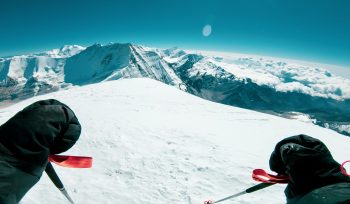
Speed Expedition on Dhaulagiri VII (7,246 M) 2019
16. October 2019 -
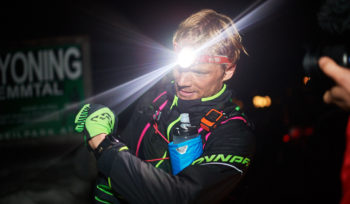
Speed Transalp Nonstop
11. March 2019 -
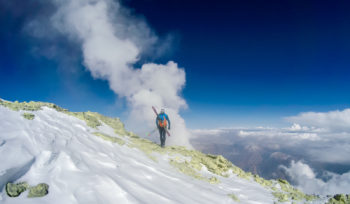
Mount Damavand 2018
9. April 2018 -
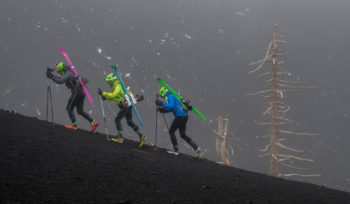
Etna 2016
10. April 2016 -
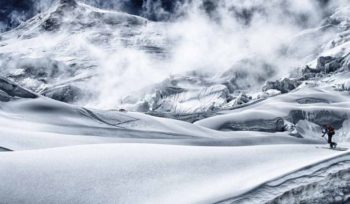
Himalaya 2014
27. August 2014 -
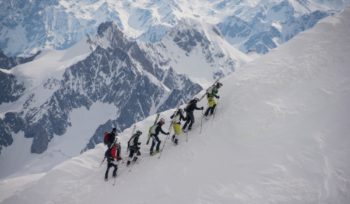
X7 2013
10. July 2013 -
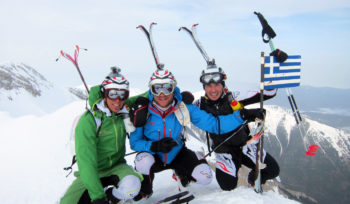
Mount Olympus 2012
10. July 2013 -
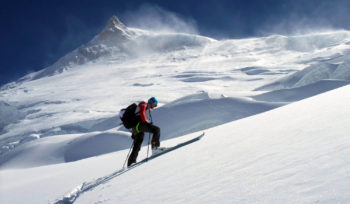
Manaslu 2012
10. August 2012 -
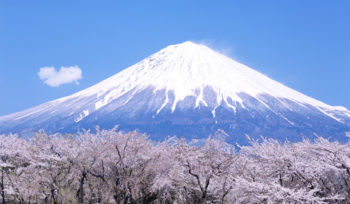
Mount Fuji 2012
10. July 2012 -
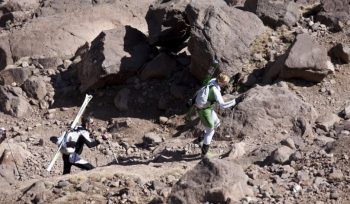
Toubkal Speed-climbing
15. March 2012 -
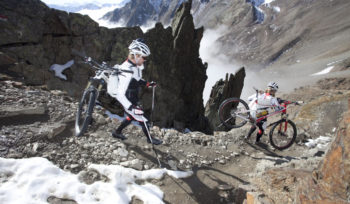
X4 2010
8. October 2010
FAQ – Frequently asked questions about expeditions
How does Benedikt Böhm's expedition style differ from classic high-altitude mountaineering?
On many of his expeditions, Benedikt Böhm relies on a fast, minimalist and athletically very demanding style. Unlike classic high-altitude mountaineering, where climbers reach the summit over several days using so-called camp chains, his focus is on lightweight equipment, efficient processes and short time windows in what is known as nonstop speed style. This approach requires intensive preparation, strong physical performance and precise decisions within the team. Benedikt climbs under his own power and does without supplemental oxygen and without the support of Sherpas or high-altitude porters.
What does speed ski mountaineering mean for Benedikt Böhm?
Speed ski mountaineering means climbing mountains as efficiently, minimally and quickly as possible and — where feasible — completing the descent on skis. For Benedikt Böhm, the focus is not only on speed itself, but also on the idea of reducing risk by spending as little time as possible at extreme altitudes. Key factors are endurance, acclimatization, weather windows, teamwork and a clear strategy.
Which mountains and regions shape Benedikt Böhm's expeditions?
Benedikt Böhm's expeditions take him to very different mountain regions around the world. These include the high peaks of the Himalaya and the Karakoram, as well as alpine projects in Europe, Asia and other regions. The range covers eight-thousanders and seven-thousanders as well as special speed projects in which athletic challenge, landscape and cultural context all play an important role.
How does Benedikt Böhm prepare for high-altitude expeditions?
Preparation for high-altitude expeditions includes physical training, acclimatization, route planning, weather analysis and equipment selection. At the same time, mental preparation plays an important role, because quick and clear decisions are often required on the mountain. Especially for speed projects, every detail has to be right — from team composition and equipment to the assessment of whether an ascent is feasible at all.